LED Lighting: The Ultimate Guide to Energy-Efficient Illumination
The LED Revolution
LED (Light Emitting Diode) technology has transformed home lighting over the past decade. What started as expensive, dim alternatives to traditional bulbs are now the standard for efficient, high-quality lighting. If you haven't made the switch, you're missing out on significant savings and benefits.
How Much Can You Really Save?
The numbers are impressive:
- LEDs use 75% less energy than incandescent bulbs
- They last 25-50 times longer than traditional bulbs
- Average household saves $225 per year by switching to LEDs
- A single LED bulb can save $80+ in electricity costs over its lifetime
- Less heat generation reduces air conditioning costs
Understanding LED Specifications
Lumens vs. Watts
Forget watts when shopping for LEDs—lumens measure actual brightness:
- 450 lumens: Replaces 40W incandescent
- 800 lumens: Replaces 60W incandescent
- 1,100 lumens: Replaces 75W incandescent
- 1,600 lumens: Replaces 100W incandescent
An LED producing 800 lumens might only use 8-10 watts!
Color Temperature
Measured in Kelvin (K), this determines the "warmth" of light:
- 2700K-3000K (Soft White): Warm, yellowish light like traditional incandescents. Best for bedrooms, living rooms, dining rooms
- 3500K-4100K (Bright White): Neutral white light. Good for kitchens, bathrooms, garages
- 5000K-6500K (Daylight): Cool, bluish-white light. Best for task lighting, offices, detailed work
Color Rendering Index (CRI)
CRI measures how accurately colors appear under the light (scale 0-100). Look for CRI of 80+ for most applications, 90+ for areas where color accuracy matters (kitchens, makeup areas, art studios).
Dimmability
Not all LEDs work with dimmers. Look for "dimmable" on the package and ensure compatibility with your dimmer switches. Some LEDs work poorly with older dimmer switches.
LED Types and Applications
Standard A-Shape Bulbs
Direct replacements for traditional bulbs. Use everywhere from table lamps to ceiling fixtures.
BR/R Flood Lights
Directional bulbs for recessed cans and track lighting. Numbers (BR30, BR40) indicate diameter in eighths of an inch.
LED Tubes
Replace fluorescent tubes in garages, workshops, and commercial spaces. Provide better light quality with instant-on operation.
Specialty Bulbs
Candelabra, globe, and decorative shapes for specific fixtures. Modern LEDs match any traditional bulb shape.
Integrated LED Fixtures
LEDs built into the fixture itself. Ultra-efficient but requires fixture replacement when LEDs fail (typically 20-50 years).
Smart LED Lighting
Smart LEDs add another layer of efficiency and convenience:
Features to Consider
- App Control: Turn lights on/off from anywhere
- Scheduling: Automatic on/off based on time or sunrise/sunset
- Dimming: Precise brightness control without dimmer switches
- Color Changing: Millions of colors and white temperatures
- Voice Control: Works with Alexa, Google, Siri
- Scenes: Pre-programmed lighting moods
- Automation: Integration with motion sensors, routines
Popular Smart LED Brands
- Philips Hue: Premium option, extensive ecosystem, best color quality
- LIFX: No hub required, bright output, good colors
- Wyze: Budget-friendly, reliable, basic features
- Nanoleaf: Unique shapes and designs, great for accent lighting
Outdoor LED Lighting
LEDs excel in outdoor applications:
- Not affected by cold temperatures (unlike CFLs)
- Instant full brightness (critical for security)
- Long life reduces maintenance (especially important in high/hard-to-reach fixtures)
- Directional light reduces light pollution
- Available in dark-sky friendly warm tones
LED Fixtures Worth Considering
Recessed LED Downlights
Modern LED recessed lights are incredibly efficient, often using just 8-15 watts while producing excellent light. Many include trim and housing as one integrated unit.
Under-Cabinet Lighting
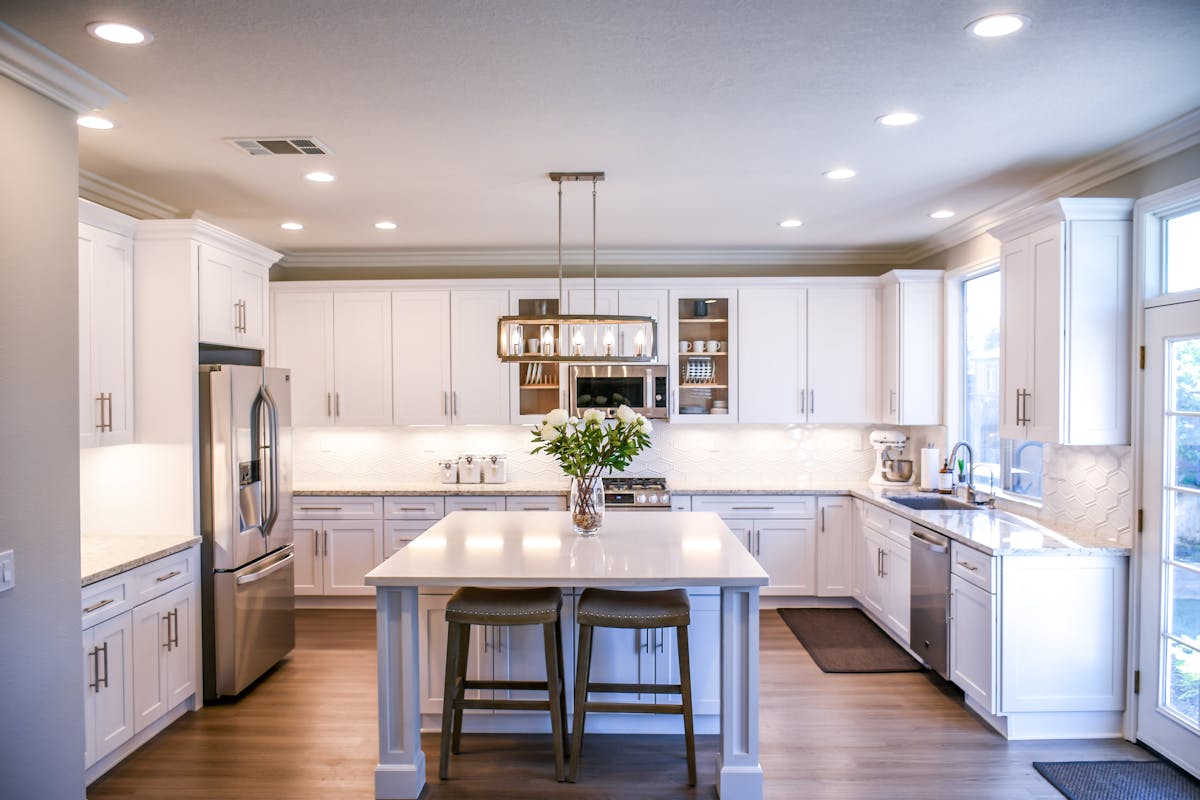
LED strips or pucks provide excellent task lighting for kitchen counters while using minimal energy.
LED Panel Lights
Flat panel LEDs replace traditional drop-ceiling fixtures with even, shadow-free illumination.
LED Track Lighting
Provides flexible accent and task lighting with minimal energy use.
Common LED Myths Debunked
Myth: LEDs Don't Get Hot
Truth: LEDs produce less heat than incandescents, but they still generate heat. They include heat sinks to dissipate it safely.
Myth: All LEDs are Dimmable
Truth: Only LEDs specifically marked as dimmable will work properly with dimmer switches.
Myth: LED Light Quality is Poor
Truth: Modern LEDs with high CRI provide excellent light quality that rivals or exceeds traditional bulbs.
Myth: LEDs Last Forever
Truth: While incredibly long-lasting (15,000-50,000 hours), LEDs gradually dim over time and eventually fail.
Maximizing LED Savings
Prioritize High-Use Areas
Replace bulbs in fixtures used 3+ hours daily first for fastest payback.
Choose the Right Brightness
Overlighting wastes energy. Use dimmer LEDs in low-traffic areas.
Use Motion Sensors
Pair LEDs with motion sensors in closets, pantries, garages, and outdoor areas.
Install Timers and Smart Controls
Ensure lights turn off when not needed.
Consider Color Temperature Carefully
Warmer tones (2700K) feel more comfortable for evening use and promote better sleep.
LED Lighting and Your Home's Wiring
While LEDs use less power, they can be sensitive to:
- Voltage fluctuations: Can cause flickering or premature failure
- Incompatible dimmers: May buzz, flicker, or damage LEDs
- Poor connections: Can cause flickering or intermittent operation
If you experience issues after switching to LEDs, consult an electrician to ensure your wiring and controls are compatible.
Disposal and Recycling
Unlike CFLs, LEDs contain no mercury and are safer to dispose of. However, they should still be recycled when possible as they contain metals and electronics. Many retailers and municipalities offer LED recycling programs.
Calculating Your Savings
Here's a simple example:
- 60W incandescent used 3 hours/day = 66 kWh/year
- 9W LED used 3 hours/day = 10 kWh/year
- Savings: 56 kWh/year
- At $0.13/kWh = $7.28/year per bulb
- Average home with 40 bulbs = $291/year in savings!
Future of LED Technology
LED technology continues to advance:
- Higher efficiency (more lumens per watt)
- Better color rendering (CRI 95+)
- Tunable white LEDs that adjust throughout the day
- Human-centric lighting that supports circadian rhythms
- Integration with whole-home automation systems
Professional LED Upgrades
Consider professional installation for:
- Recessed LED retrofit or new installation
- Landscape and security lighting systems
- Dimmer switch upgrades for LED compatibility
- Smart lighting system design and setup
- Commercial LED retrofit projects
Conclusion
Switching to LED lighting is one of the easiest and most effective energy-saving upgrades you can make. With immediate energy savings, longer life, better light quality, and decreasing costs, there's never been a better time to make the switch. The initial investment pays for itself quickly through reduced energy bills and eliminated bulb replacement costs.
Ready to upgrade to LED lighting? Power Flow Electric can assess your lighting needs, recommend the best LED solutions, and handle professional installation. Contact us for a lighting consultation and start saving today!